Suno is easy to try, but developers often need more than a music box. They need one API that can handle music, images, and video without separate model integrations. Suno also has no official public API, which is another reason developers look elsewhere. Here are the strongest Suno alternatives, with Apiframe first for teams building multimodal AI products.
1. Apiframe
Apiframe is one API for generating AI images, video, and music through a developer-friendly interface. It is best for product teams that want to add several types of media without managing a different provider for each model.
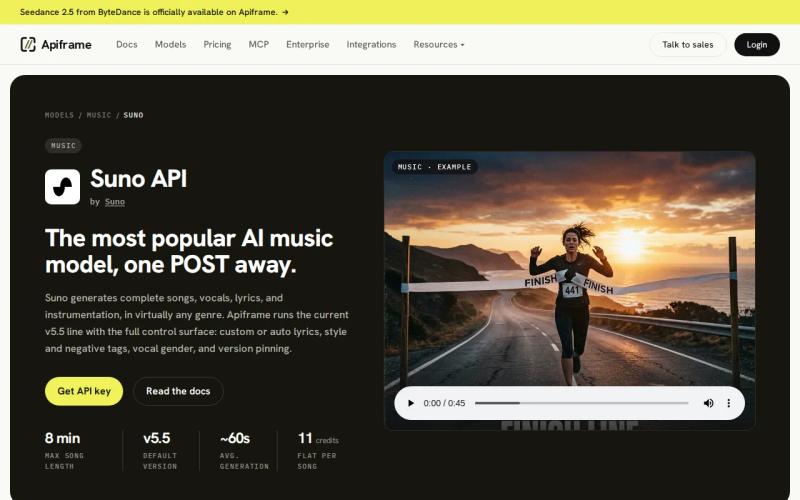
The main advantage is simple: one integration can cover more than music. You can send a request for an image, a video, or a track through the same platform. That makes Apiframe a strong fit for apps that need a song generator next to a visual editor, social post builder, or video tool. Our AI music API roundup shows how music generation fits alongside the rest of a media setup.
Apiframe also lets teams switch music models through one API instead of rebuilding the whole app around one provider. That matters when a model’s vocal style, cost, or track length does not fit a given use case. Our comparison of Suno, Udio, Mureka, and AIVA breaks down how those models differ if you are choosing between them. If you want to use Suno itself, our Suno API guide explains how to generate music with Suno through Apiframe.
The trade-off is that you still need to test each model for your product. One API reduces integration work, but it does not replace reviewing output quality, usage limits, and commercial rights.
Key takeaway: Choose Apiframe when your app needs music plus image and video generation behind one API.
2. OpenArt: A low-cost option for multimodal AI generation
OpenArt is a creative platform for consumers that covers image, video, and music generation. Its music runs on Google’s Lyria 3 model. It is best for creators and small teams who want one workspace to draft visuals, video, and a soundtrack, not for developers who want a bare API.
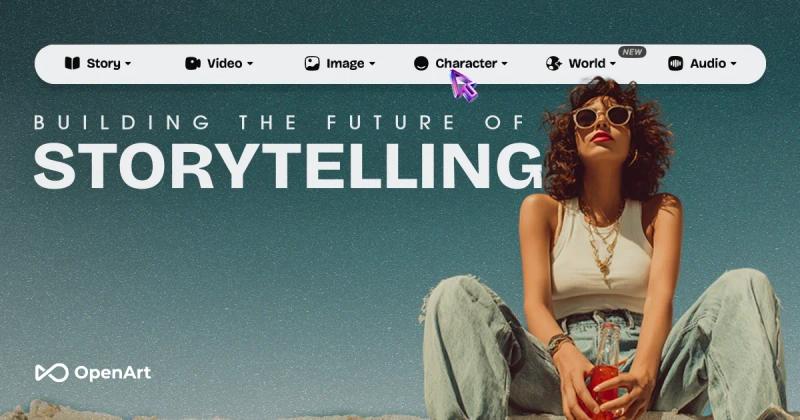
OpenArt’s main draws are range and price. It offers access to many video models (such as Seedance, Kling, and Veo) alongside its own music and image tools, with pricing based on credits instead of billing per model. That is worth checking if video is a big part of your spending, since a team making many short clips may care more about cost per usable result than about music quality alone.
The platform is also useful when your work starts with visuals. You might draft an image, turn the idea into a video, then add a Lyria-generated soundtrack that matches the mood. That wider workflow gives OpenArt a place among Suno alternatives for creators who do not want a music-only tool.
The important caveat for developers: OpenArt is built as a web app for creators first, not as an API-first product. If you are building your own application instead of using a hosted tool directly, confirm what programmatic access really looks like before you plan an integration around it.
OpenArt makes sense for creative teams focused on visual output and cost checks. Pick another option if your first need is a developer API that covers all three media types.
3. Luma: AI video generation with native audio
Luma, through its Dream Machine platform, is a video generation service built around its Ray 3 model. It also offers a growing set of audio tools: AI-generated sound effects, background sound, voiceovers, and video-to-audio, where the platform creates a soundtrack to match a generated clip. It is best for teams whose main need is video, with music and sound as an AI-generated extra and not a licensed library.
This can shorten the path from a rough idea to a finished video. A creator can generate a scene, then generate matching audio on the same platform, instead of searching for a separate sound effect or licensed track. That is very different from a stock media library. Luma does not hand you pre-made assets to license. It creates new audio on demand, the same way it creates video.
Luma belongs on this list because it covers video and audio generation, and it offers both a consumer web app and a developer API. The difference from Apiframe is emphasis. Luma is built around Ray 3 and a video-first experience, while Apiframe is aimed at developers who want music, image, and video from several different models behind one integration.
That difference affects your build plan. If you want Ray 3’s specific look and its audio-video pairing, Luma’s own API is the direct route. If your product needs to compare several video or music models instead of committing to one, a broader unified API fits better. Our Luma API guide covers its features, pricing, and code.
The caveat is that public speed data is thin across this whole category. Many tools say “instant” or “fast,” but few publish a clear generation time for a full track or clip. Test with the same prompts and lengths before you make a speed promise to your users.
4. WaveSpeedAI: One API for 1,000+ AI models
WaveSpeedAI gives access to more than 1,000 image, video, audio, and language models through one platform. It is best for teams that want a large model catalog and plan to compare providers in one place. Our WaveSpeed AI API guide covers its pricing, model list, and a working code example in more detail.
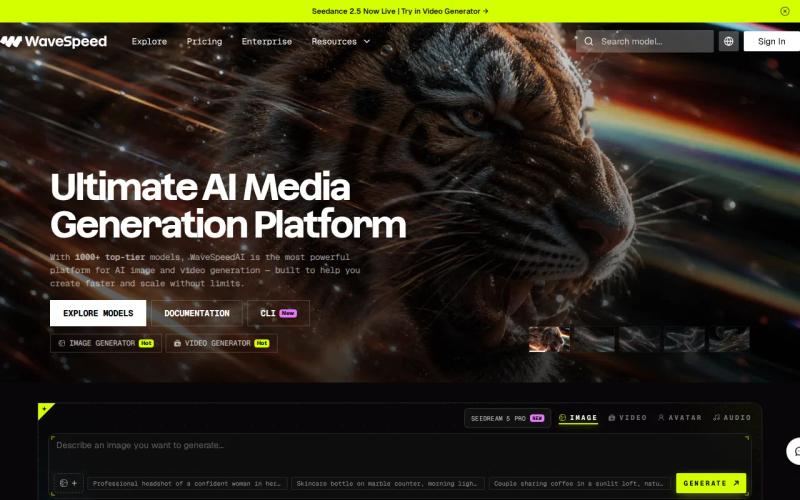
Model range is the draw. A platform with many models gives you more room to test a low-cost option for drafts, then move to a different model for the final result. It can also help when a model changes its output style or stops fitting your use case.
Teams comparing model hubs with narrower APIs may find our OpenRouter alternatives for AI media APIs useful background. That piece is not about music specifically, but the trade-off is the same: wide choice versus a tight focus. The key question is how much choice your product needs after launch. A huge catalog only helps if your team has time to test models and keep clear backup options.
WaveSpeedAI’s limitation is the work of choosing. More models mean more decisions, and model names alone do not tell you which one handles your prompt well. You may need your own test set, cost log, and quality review before sending customer jobs through it at scale.
Choose WaveSpeedAI when model access is your main limit. Choose Apiframe when you want multimodal generation with a more focused developer path.
Pro tip: Test ten fixed prompts across each candidate model. Keep the prompt, track length, and file format the same so your comparison is fair.
5. KIE AI Music API: Built for realistic text-to-music apps
KIE AI’s Music API turns text prompts into full tracks with vocals or instruments, with natural-sounding dynamics. It is built on Suno’s own models, not a music model of its own. It is best for developers building a music-first app where realistic song output matters more than image or video generation.
The API has a narrower focus than Apiframe, which can be a benefit when your product only needs music. You can keep your integration centered on prompts, vocal tracks, instrumentals, and the job flow that returns an audio file. It also supports extending existing tracks, writing lyrics, and adding vocals or instrumentals to uploaded audio.
Its listed media type is music and audio, so do not assume the same endpoint covers images or video. KIE AI as a wider platform does offer separate image and video endpoints, though.
Because it relies on Suno’s models, check that its access is still active and stable. Our comparison of Suno API providers found that some providers had dropped Suno access, so this is worth confirming before you build.
That focus makes KIE AI’s Music API a sensible test for a song app, lyric tool, or soundtrack feature. Still, test vocals with your own prompts, since natural dynamics can sound different across genres, vocal styles, and song structures.
One warning applies to every music API on this list: speed is hard to compare. Run your own timing tests before you promise a response time.
Pick KIE AI’s Music API for a music-only build. Pick Apiframe if the same product may later add image or video generation.
Suno alternatives comparison table
The best choice depends on your product. This table focuses on what affects your build most: media coverage, how you access it, and what each option suits.
| Option | Media coverage | API position | Best fit |
|---|---|---|---|
| Apiframe | Image, video, music | Unified API | Multimodal developer products |
| OpenArt | Image, video, music | — | Creative teams tracking video cost |
| Luma | Image, video, music | — | Hybrid media production |
| WaveSpeedAI | Image, video, music | Unified API | Large model testing |
| KIE AI Music API | Music | Unified API | Music-first applications |
If your app may switch models over time, read our AI music API pricing breakdown and our AI music API guide before you design your data. Your first choice should support the output format, licensing review, and backup plan your product will need.
FAQ
What is the best Suno alternative for developers?
Apiframe is the strongest Suno alternative for developers who need music alongside image and video generation. Its unified API keeps those media types behind one integration, which reduces the work of adding several generation features to an app. A music-only product may still prefer KIE AI’s Music API for its narrower focus.
Are there Suno alternatives with an API?
Yes, several Suno alternatives in this list have a developer API. Check the supported media types carefully. An API may cover audio alone, while your product may need images or video later. Some options here, like OpenArt, are mainly consumer web apps and not developer-first APIs, so confirm what programmatic access really looks like.
Which alternative supports music, images, and video?
Apiframe supports music, images, and video through one platform aimed at developers. OpenArt also spans all three, but it is built as a creative tool for direct use, not an API-first product. The important difference is how you connect to it: if your team needs one developer-facing API for all three, Apiframe is the clearer fit.
Are AI music APIs fast enough for live apps?
Some AI music tools may feel fast, but published speed data is limited. Treat Suno alternatives as background jobs unless your own tests prove otherwise. Use job checks or webhooks (automatic notifications when a job finishes) instead of making users wait on one request. Our guide to setting up webhook callbacks shows how.
How can you evaluate a Suno alternative?
Use the same prompts, genre notes, lyric length, and output settings for each option you test. Completion time, audio quality, and failure rate are useful points to compare. Commercial rights should also be checked for your intended use. A tool that sounds good in a demo may still be a poor fit if its API flow or output terms do not match your product. Our guide on how text-to-music AI creates vocals can help you judge vocal quality.
Conclusion
Choose Apiframe if you want one developer-friendly API for AI music, images, and video. Start by sending a small set of fixed music prompts through the API, then compare output quality, wait time, and integration effort before you expand the feature. Our Getting Started with Apiframe guide walks you through your first call.