Note: this article is general information, not legal advice. Copyright law around AI-generated content is still changing, and the details matter for your specific situation. If you're making a major business decision based on this, talk to a lawyer.
The Short Answer: Who Owns Content Generated via an API
Under current US law, content that comes purely from an AI model generally can't be copyrighted on its own. The Copyright Act requires a human author, and the US Copyright Office has held for several years that content produced by a generative model, with no meaningful human creative input beyond a text prompt, doesn't meet that bar. This isn't a gray area anymore. On March 2, 2026, the Supreme Court declined to review Thaler v. Perlmutter, leaving in place a lower court ruling that copyright protection requires a human author. A prompt on its own, no matter how detailed, is treated as an idea or instruction, not a creative work the prompt writer authored.
That doesn't mean AI-generated content is a legal free-for-all, or that you can't build a commercial product around it. It means the copyright question and the "can I sell this" question are two separate things, and you need to understand both.
Why This Question Matters for API-Based Products
Building commercial products on generated content
If you're shipping an app, a template marketplace, or a media library built on top of an AI image, video, or music generation API, you need to know whether the assets your users create can be protected from copying, and whether you or your users are even allowed to sell them in the first place. Those are different questions with different answers.
Client work and deliverables using AI images, video, or music
Freelancers and agencies delivering AI-assisted work to clients run into a related issue: does the client actually own what they're paying for, and can it be defended if someone else copies it? This comes up across a wide range of real-world use cases, from marketing agencies producing ad creative to small studios delivering AI-assisted video. Setting expectations here before a project starts saves an uncomfortable conversation later.
What US Copyright Law Actually Says About AI-Generated Works
The human authorship requirement
US copyright law has required a human author since long before generative AI existed. Courts have pointed back to an 1884 Supreme Court case, Burrow-Giles Lithographic Co. v. Sarony, which held that a photograph could be copyrighted because a human made a series of creative choices (posing the subject, arranging the scene, setting the lighting) even though a machine, the camera, produced the final image. The question with AI-generated art is whether the human's role rises to that same level of creative control. So far, both the Copyright Office and the courts have said typing a prompt doesn't.
Purely AI-generated vs. AI-assisted (human-edited) works
The line the Copyright Office draws is between output that's purely AI-generated and output where a human has made real, creative changes. In a widely discussed 2023 decision involving a graphic novel called Zarya of the Dawn, the Office granted copyright protection to the human-written text and to the human's selection and arrangement of AI-generated images into the finished work, but not to the individual AI-generated images themselves. That pattern still holds: edit, arrange, and meaningfully change AI output, and your human contribution can be protected. Leave the raw output as-is, and it generally can't.
How Copyright and Commercial Rights Differ by Provider
Model-level license terms
Copyright law tells you what can be protected. A provider's terms of service tell you what you're allowed to do with the output, and those are two completely separate things. Model providers each set their own rules, and those rules change over time, so treat any specific summary (including this one) as a starting point, not a substitute for reading the current terms yourself. As one example, Midjourney's terms as updated in early 2026 grant paid subscribers a broad commercial license to sell what they generate, with an added ownership requirement for businesses above a revenue threshold, which is separate entirely from whether that output can be copyrighted. For prompt-writing tips if you're working with Midjourney specifically, see our complete Midjourney prompt guide. Other providers, including those behind Flux, Stable Diffusion, and Midjourney, as well as Suno, each publish their own commercial use terms, and free-tier limits are common across the board.
What changes when you access a model through an API vs. the provider's own app
Accessing a model through an API instead of a provider's consumer app doesn't change the underlying copyright analysis. What can change is the contract terms: some providers apply different commercial use terms to API access than to their consumer app, so it's worth checking the specific terms that apply to the access method you're using, not just the model name.
Can You Sell AI-Generated Images, Video, or Music?
Marketplaces and stock platforms' AI content policies
Whether you can sell AI-generated content isn't purely a copyright question either. Most major stock photo and asset marketplaces have their own AI content policies, ranging from outright bans to required disclosure labels to full acceptance, and those policies shift often enough that it's worth checking the current rules on any platform before you submit AI-generated work.
Client contracts and disclosure obligations
For client work, the safer approach is disclosing AI use up front rather than after the fact. Some clients have their own policies about AI-generated deliverables, and some jurisdictions and industries are moving toward disclosure requirements. Building a simple disclosure clause into your contract template avoids disputes down the line.
International Differences to Be Aware Of
Copyright treatment of AI-generated works isn't uniform globally, and this section is necessarily a simplified sketch, not a substitute for local legal advice.
The UK is a notable outlier. Its Copyright, Designs and Patents Act includes a specific provision for "computer-generated works" that have no human author, granting authorship to the person who made the arrangements necessary for the work's creation, with a shorter protection term than standard human-authored works. That's meaningfully different from the US position, where a purely AI-generated work gets no copyright protection at all.
The EU generally applies a "human intellectual creation" standard similar in spirit to the US approach, though the exact treatment of AI-generated works isn't fully harmonized across member states and continues to evolve. Other jurisdictions vary widely, and some haven't addressed the question directly yet. If your product has meaningful usage in a specific country, it's worth checking that jurisdiction's current position rather than assuming US or UK rules apply.
Practical Steps for Teams Building on an AI API
Reading and tracking each model's commercial use terms
Terms change, and they change more often than most teams expect for a fast-moving category like generative AI. If your product relies on a specific model's commercial license, it's worth assigning someone to periodically re-check the terms rather than assuming what you read at launch still applies a year later.
Documenting provenance and generation records
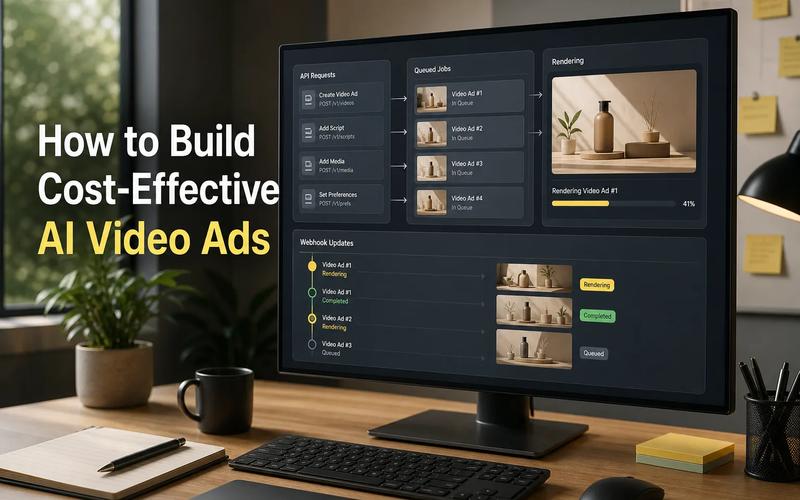
Keeping a record of what was generated, with which model, on which date, and under which prompt, is useful for more than compliance. It helps you demonstrate the extent of human involvement if a copyright or licensing question ever comes up, and it makes it easier to audit your own content pipeline as your product scales. If you're generating through an API, your job history and webhook payloads are often the simplest place to pull this record from, since they already capture the model, prompt, and timestamp for every request.
When to consult a lawyer
This guide is a starting point, not a substitute for legal advice. Talk to a lawyer before a large commercial deal that depends on content ownership, if ownership of specific generated assets is disputed, or if you're operating in a regulated industry where content origin carries extra legal weight.
FAQ
Is AI-generated art protected by copyright?
Generally, no, not on its own, under current US law. If a human makes real creative edits, arrangements, or additions to AI-generated output, that human contribution can be protected, even though the underlying AI-generated elements typically stay unprotected.
Can I trademark a logo made with an AI image API?
Trademark law is a separate legal framework from copyright, with its own requirements around distinctiveness and use in commerce. It's possible to trademark a logo regardless of how it was made, but that's a different question from whether the logo itself can be copyrighted, and it's worth getting specific advice if a logo is central to your brand.
Do I need to disclose AI use to clients or customers?
There's no single answer that applies everywhere, since disclosure rules vary by jurisdiction, industry, and platform. As a practical default, disclosing AI use in client contracts and on marketplaces that require it avoids most disputes, even in cases where it's not strictly required. If you're building a commercial product on generated media, pairing solid legal groundwork with a reliable generation API matters just as much as the legal side. Apiframe's per-model guides, including the Midjourney prompt guide and Suno API guide, link out to each provider's current terms so you can check commercial use rights alongside the technical docs. For a broader look at the models this applies to, see our AI Image API guide, AI Video API guide, and AI Music API guide.
You can also get an API key and start with free credits if you're building a product that relies on tracking generation provenance across models.
Apiframe Team
The team behind Apiframe - making AI generation accessible to everyone.