Seedance 2.0 is ByteDance's video model, and there are now seven real ways to call it via API. Here's how they compare on resolution ceiling, pricing model, and who each one actually fits, so you can pick one instead of testing all seven.
Quick comparison
| # | Provider | Type | Max resolution | Pricing model | Best for |
|---|---|---|---|---|---|
| 1 | Apiframe | Unified multi-model API | 4K | Per second | One key for Seedance 2.0 and every other model you'll need, now at 4K |
| 2 | Kie.ai | Model-focused API platform | 4K | Fixed/dynamic per generation | Tier-level control (Standard/Fast/Mini) within Seedance |
| 3 | fal.ai | Serverless inference platform | 720p | Per second, two tiers (Standard/Fast) | Fastest official launch, sub-2-minute generations |
| 4 | Replicate | Community model host | 4K | Per second | Prototyping, versioned deployments |
| 5 | PiAPI | Budget API platform | Not published | Tunable cost/quality | Indie developers, budget-conscious projects |
| 6 | OpenRouter | Aggregator/router | Depends on backend | From $7 per million tokens | Swapping models without re-integrating |
| 7 | BytePlus ModelArk | Official (ByteDance) | Highest, source model | Enterprise contract | Teams that need the source, not a wrapper |
1. Apiframe
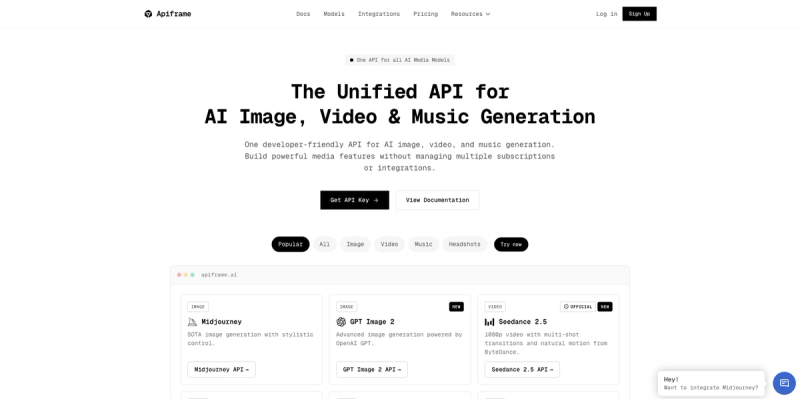
Apiframe runs Seedance 2.0 through the same API key and endpoint pattern as every other model on the platform, Nano Banana, Veo, Kling, Wan, and the rest, so integrating Seedance 2.0 doesn't mean a separate vendor relationship, separate docs, or separate billing. Requests run in the background with webhook delivery, and there's no separate ByteDance account to manage. The full spec breakdown lives in the Seedance 2.0 API guide.
Resolution now goes up to native 4K, alongside 1080p and 720p, so the resolution gap that used to separate Apiframe from Kie.ai is closed. Billing is per second of video output; check the live pricing page for current rates.
Best for: teams that need Seedance 2.0 today and will likely need other models later. One key, one bill, up to 4K, no repeat integration work.
2. Kie.ai
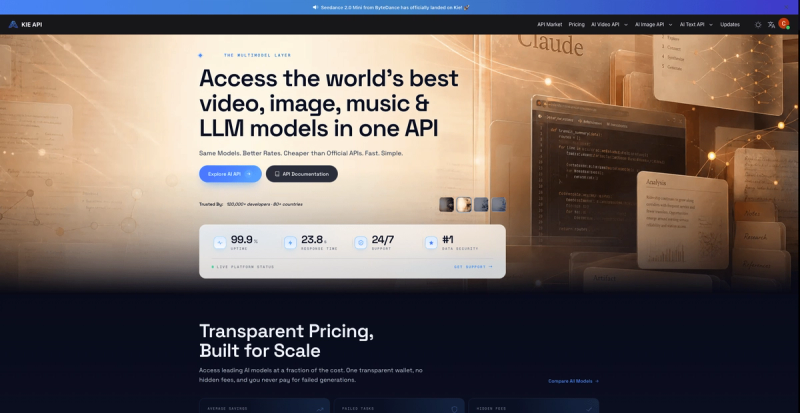
Kie.ai supports up to 4K output for Seedance 2.0, which used to be the standout spec that separated it from Apiframe. Apiframe has since added 4K support too, so resolution alone no longer decides between the two. What still sets Kie.ai apart is its three-way split within Seedance itself, Seedance 2.0 standard, Seedance 2.0 Fast, and a separate Seedance 2.0 Mini, plus free credits for new accounts.
Worth being direct about who actually needs 4K in the first place: most video destined for web, social, or app playback tops out well under it, and 1080p covers the vast majority of production use cases without the added generation cost 4K typically carries. If your output is genuinely bound for a 4K deliverable, print-adjacent work, large-format displays, both Apiframe and Kie.ai now cover that.
Best for: teams that want granular tier selection (Standard vs. Fast vs. Mini) within Seedance specifically, rather than one endpoint spanning every model.
3. fal.ai
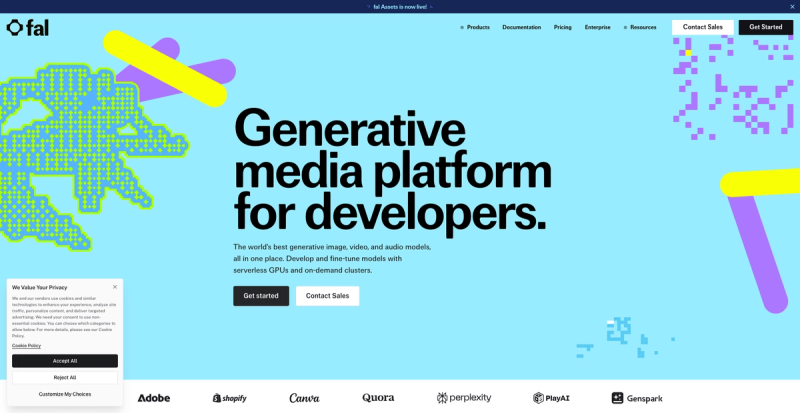
fal went live with Seedance 2.0 on April 9, 2026, through a serverless platform with dedicated endpoints for text-to-video, image-to-video, and reference-to-video, each in a Standard and a Fast tier. Generations complete in under two minutes.
The tradeoff: resolution caps at 720p, the lowest ceiling of the providers with a published spec.
Best for: quick experimentation, the playground works without an API key at all.
4. Replicate
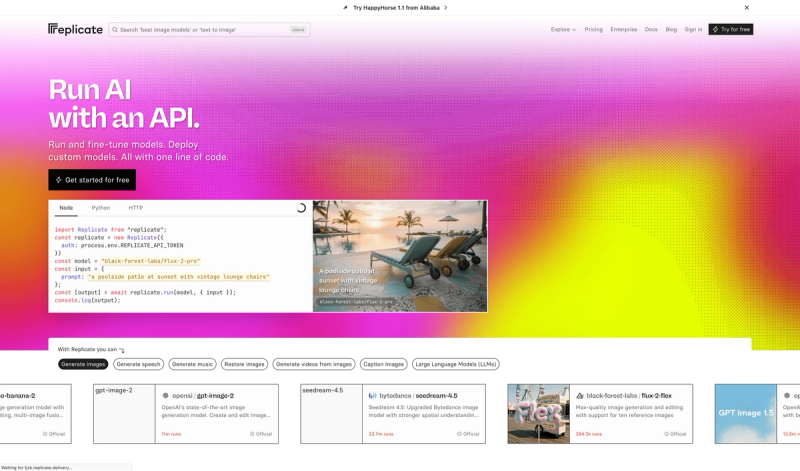
Replicate hosts Seedance 2.0 through its usual model-versioning system, billed per second of output, with the broad model availability that comes from a community-driven platform. Exact resolution wasn't confirmed in current research, verify directly before committing.
Best for: prototyping and iterative development before locking into a production vendor.
5. PiAPI
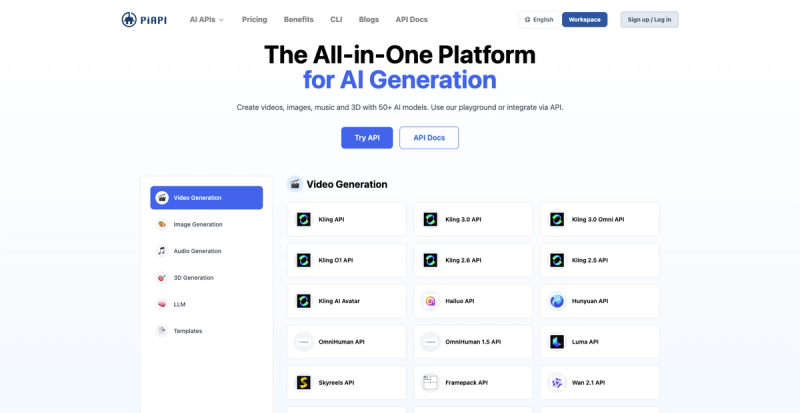
PiAPI is built around cost control, tunable parameters that trade generation quality for a lower price per video. Exact current pricing wasn't confirmed in this research pass, check PiAPI directly for live numbers.
Best for: solo developers and small teams optimizing for cost per generation over raw quality.
6. OpenRouter
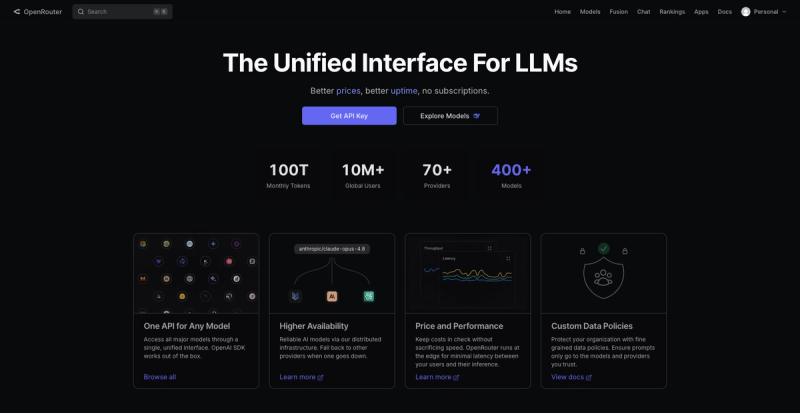
OpenRouter doesn't host Seedance 2.0 itself, it routes requests to whichever backing provider can serve them, with automatic fallback if one is at capacity. Pricing is listed from $7 per million tokens, a different billing unit than the per-second model most other providers use here, convert it to an expected cost per clip before comparing directly.
Best for: teams that want to swap between models or backends without rebuilding their integration each time.
7. BytePlus ModelArk (official)
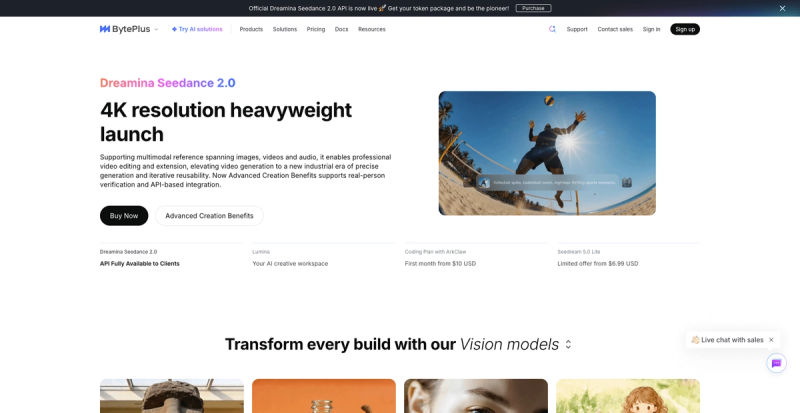
Going direct through BytePlus ModelArk or Volcano Engine means no wrapper and the earliest access to new capabilities as ByteDance ships them. It also means managing your own ByteDance-ecosystem account and approval process, the exact friction the other six providers exist to remove.
Best for: large teams with the internal resources to manage a direct enterprise relationship.
Which one should you actually use?
For a single one-off project scoped tightly around Seedance 2.0 and nothing else, several of the options above will do the job. But most teams building a real product end up needing more than one model, a second video model for comparison, an image model for stills, maybe audio down the line, and that's where paying per-vendor integration cost starts to add up.
That's the case for Apiframe: one API key covers Seedance 2.0 today, now up to 4K, and every other model on the platform as you add them, with the same job and webhook pattern throughout. Resolution isn't a tiebreaker against Kie.ai anymore, so it comes down to whether you want tier-level control within Seedance (Kie.ai) or one endpoint across every model you use (Apiframe). Our unified AI API guide covers what to weigh when deciding whether that's worth it for your project. If you're still prototyping and want to move fast without commitment, fal.ai's no-key playground or Replicate are reasonable starting points. For everyone building toward production with more than one model in the roadmap, a unified API is worth the setup time it saves later.
For a broader look at how Seedance stacks up against other video models like Kling, Wan, and Veo, see our roundup of the best AI video generation APIs, and check our AI video API pricing guide for how per-second costs compare across providers.
Get an API key and start with free credits, or read the full Seedance 2.0 API guide for specs, pricing, and code examples.
FAQ
Is Seedance 2.0 available directly from ByteDance?
Yes, through BytePlus ModelArk or Volcano Engine, but it requires its own account and approval process, which is what the third-party API providers above are built to skip.
Which provider has the highest resolution?
Apiframe and Kie.ai both support up to 4K. fal.ai is the outlier on the low end, capped at 720p.
What's the cheapest way to test Seedance 2.0 before committing?
Kie.ai and Apiframe both offer free credits for new accounts, and fal.ai's playground doesn't require an API key to try first.
Do these providers require a separate ByteDance account?
No. Only the official BytePlus ModelArk / Volcano Engine route requires one.
Is Seedance 2.5 available yet on any of these?
Yes, as of August 2026. Seedance 2.5 launched July 31, 2026, and Apiframe added it to its unified API on August 7, 2026, same key and billing as Seedance 2.0. Note that ByteDance's originally announced native 4K didn't make it into the shipped model; Seedance 2.5 currently tops out at 720p. See the Seedance 2.5 guide for current status.